
The traditional Yule log is a classic symbol of the Winter Solstice and its emphasis on the hearth and home.
And it couldn’t be easier to make.
In just 3 simple steps, create a lovely centerpiece for your Winter Solstice dining table or altar.


Meaning of the Yule Log
The exact origin of the Yule log is unknown.
However, the first known historical references to the Yule log indicate it descended from Germanic paganism.
According to folklorist Linda Watts, the Yule log symbolized protection and luck. Some people even used it as a divination tool:
” . . . . by counting the sparks and such, they seek to discern their fortunes for the new year and beyond.”
In the context of modern witchcraft and magical practice, the Yule log is primarily a custom to honor the Winter Solstice and to symbolize the return of the light after the darkest night of the year fades.
Things You Will Need
(Please note: This section contains affiliate links for your convenience. You can read all about this glorious practice on Moody Moon’s disclosure page).
-log
-safety goggles or protective eyewear
-natural items for decoration
-tea candles
Step 1
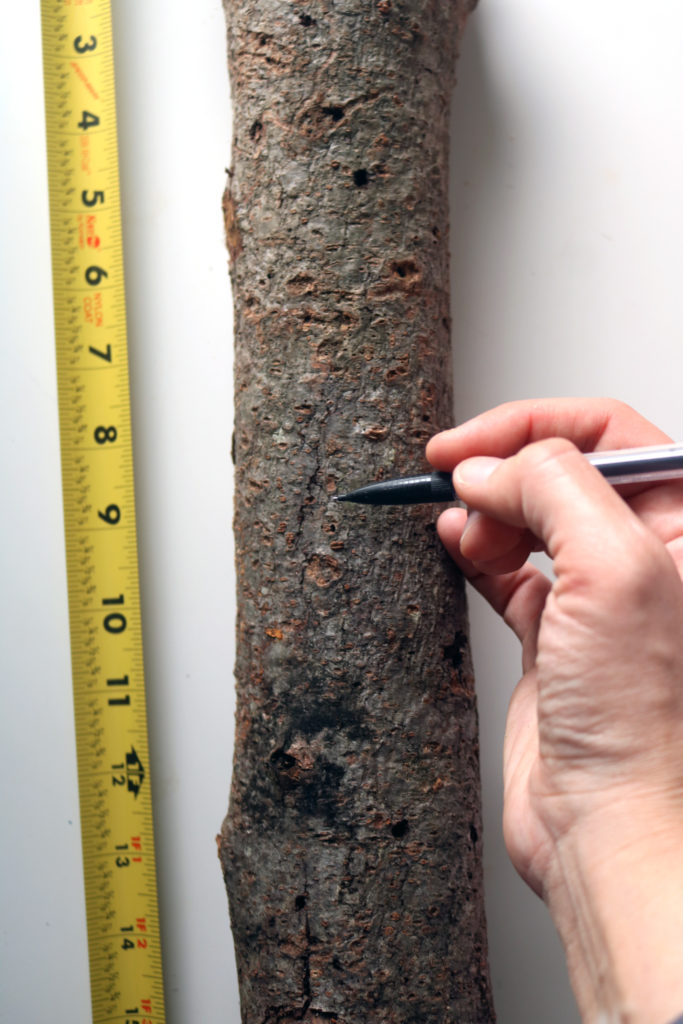

Measure exactly where your holes are going to be in advance so that they’re evenly space.
Mine were about 5 inches apart, but this will vary a lot depending on the size of your log.
Step 2

Put on your safety goggles or protective eyewear to prevent splinters from getting in your eyes.
Using a 1.5-inch spade drill bit, drill some shallow holes in your log. This is a two-person job! You need to have someone hold the log firmly while you drill so that it doesn’t roll around.
This size drill bit will allow a standard tealight to fit snugly.
You don’t need to drill too deep. Just enough so that the tealight won’t fall off the log. Only go down about 1-1.5 inches in depth. Any more than that, and the tealight will be difficult to remove.
Step 3
Optionally, consider embellishing your Yule log with natural foliage or herbs.
Here, I placed the log on top of a swath of crimson fabric and surrounded it with living holly berries and leaves to bring out its natural beauty and grace.
But you can use whatever is available! Evergreens, including pine needles, rosemary and juniper look lovely.
Or, try orange citrus peel and cinnamon sticks.
Definitely avoid placing anything too close to where the flames burn, and never leave them burning unattended!!
Blessed be and Happy Winter Solstice!
Sources & References
What’s Documented vs. Author’s Contributions
Documented (cite as Yule tradition/folklore/cultural practice):
- Yule log origin: Germanic/Scandinavian pagan winter solstice tradition (first documented evidence 1184 AD, but likely older)
- “Yule” etymology: Old Norse “jól” or “júl,” Old English “geol/geola,” Germanic “hwéol” (wheel) – all referring to midwinter festivals
- Traditional Yule log practice: large log or tree trunk burned in hearth over 12 days (Christmas Eve through Twelfth Night)
- Original symbolism: encouraging sun’s return, protection, good luck, prosperity, warding evil spirits
- Burning tradition: log progressively fed into fire, portion saved for following year’s lighting ceremony
- Ash uses: collected for good fortune, home protection, field fertility, protection from lightning
- Modern adaptation: 1960s shift to dessert form (bûche de Noël/Yule log cake) as home heating changed
- Medieval practices: log blessed by priest, sprinkled with wine/salt/oil, various family roles in ceremony
- Scholarly debate: exact origins unclear; proposed sources include Germanic, Celtic, Baltic, Slavic, Roman pagan customs
- Divination practice: counting sparks to discern fortunes (documented folk practice)
- Regional variations: Sweden (Julbocken/Yule goat), France (bûche de Noël cake), Germany (Christklotz), Scandinavia (Thor honor)
Author’s Original Work (Lumina Indigo):
- The practical DIY project approach: drilling tealight candles into log
- Modern elegant variant: smaller decorated log with candles as centerpiece rather than burning in hearth
- Step-by-step instructions: measuring, drilling (1.5″ spade bit), embellishing with natural foliage
- Decoration suggestions: holly, evergreens, pine needles, rosemary, juniper, orange peel, cinnamon sticks
- Integration with modern witchcraft practice: Yule log as altar/table centerpiece for Winter Solstice celebration
- Safety guidance: proper depth for tealights, supervising candles
Key Documented Frameworks
Primary Scholarly Sources:
- Wikipedia (Yule Log) – comprehensive history from 1184 AD first documented reference through modern adaptations
- Wikipedia (Yule) – etymology, festival structure, Germanic origins, Christian integration, modern neo-pagan celebration
- Britannica (Yule) – festival origins in ancient Norse/Germanic peoples, modern neo-pagan practices, themes of light/fire/feasting
- The Venerable Bede (8th century) – “Giuli” as double-month (Dec-Jan) in pagan Germanic calendar around winter solstice
- Henry Bourne (1725) – first to link Yule log to Anglo-Saxon paganism
- Robert Herrick (late 16th century) – “Ceremonies for Christmas” references Yule Log tradition
- John Aubrey (1650-1687) – first mentions name “Yule log” or “Christmas block”
Folklore & Cultural Documentation:
- St. Nicholas Center – folklorist Linda Watts on Yule log symbolism: protection, luck, divination tool via spark counting
- Old Farmer’s Almanac – Yule log as sun-honoring tradition, 12-day burning, ash collection for protection/fertility
- St. Tammany Parish Library – origins in Germanic/Scandinavian paganism, earliest 17th-century German texts
- St. Neots Museum – Yule centered on sun, Odin associations, “wild hunt” mythology, 12-day observance structure
- Various sources on Yule cake evolution: shift from literal burning logs to bûche de Noël in 19th-century France as homes modernized
Documented Symbolism & Uses:
- Winter solstice marking and sun’s return encouragement
- Protection and good luck for household
- Prosperity and fertility (ashes spread on fields)
- Community gathering and feast centerpiece
- Divination through spark observation
- Continuation across generations (saved wood from previous year)
- Modern Wiccan adaptation: rebirth of Great Horned Hunter god/solstice sun
Author Credentials
Lumina Indigo: Founder of Moody Moons (2012), 20+ years modern pagan experience, professional tarot reader, kitchen witch, specializes in in-depth research on modern spirituality


