
Ceromancy is a method of divination using a candle. The candle is lit and the flame examined for clues to the mood and energy surrounding the situation and then the wax is allowed to drip into a bowl of cold water or sometimes onto a piece of paper.
The practitioner examines the shapes formed by the melted wax and makes predictions based on his or her interpretation of the shapes.
What is ceromancy?
Ceromancy is divination through wax, usually by interpreting the shapes that form as melted candle wax cools. One familiar method involves dripping wax into cool water, although practitioners may also examine wax left after a candle has burned.
You look at the shapes and consider what they bring to mind in relation to your question. Think of it as a symbolic reading rather than a reliable prediction, with your own associations playing a part in how you understand the result.
Is it the same as reading a candle flame?
They are related practices but they focus on different stuff! Wax reading looks at cooled wax while flame reading considers the movement or appearance of a burning flame.
For your first attempt, I would choose just the wax so you don’t feel you need to interpret everything happening around the candle.
You can explore one practice properly before adding another.
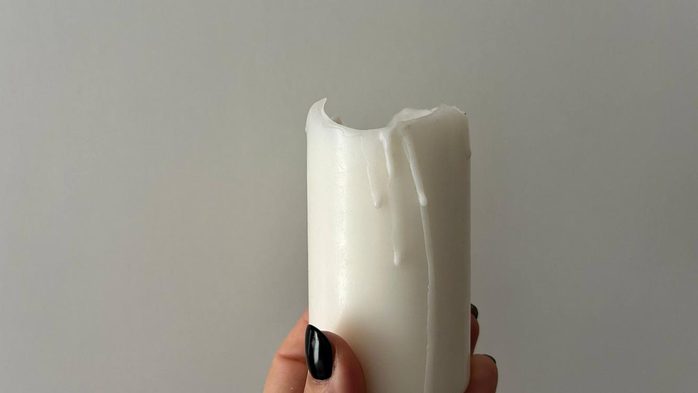
What do you need?
For the simplest version, begin with a plain candle in a suitable holder, a heat-resistant tray and a notebook, then examine any wax that naturally remains once the candle is extinguished and completely cool.
You don’t need herbs, oils or glitter on the candle, especially while you are learning. Check the candle’s instructions before using it and keep the setup away from paper, curtains and anything else that could catch fire, staying nearby while it burns.
What question should you ask?
Choose one open question that gives you something useful to reflect on, such as “What could help me approach this change?” or “What needs more of my attention?” I would avoid questions that ask the wax to diagnose an illness or tell you exactly what another person thinks.
A reading can help you explore your perspective, but it can’t verify someone else’s private feelings or replace practical information. Write the question down first so you can return to it when several possible meanings come up.
How to prepare for your reading
Clear your space and give yourself a few quiet moments before lighting the candle, allowing your attention to settle on the question rather than trying to create a perfect spiritual mood.
You can say, “I approach this reading with curiosity and clear judgment,” if you enjoy including a little spoken intention.
There is no need to wait until your mind is completely silent, just choose a moment when you aren’t rushing or feeling too tired to manage a candle safely.
How to read the cooled wax
Once everything is extinguished and fully cool, look at the wax without immediately searching for a meaning online. Notice its outline, the spaces between pieces and anything that catches your attention.
Write down what you actually see before deciding what it represents, perhaps “a curved line beside a round shape” rather than jumping straight to “a journey is coming.”
You can then consider a few possible images and ask which, if any, connects thoughtfully with your question. A pic can be useful if you want to revisit the reading without keeping the wax.
What do common wax shapes mean?
There is no single dictionary everyone must follow, but familiar images can give you somewhere to begin.
A heart might bring up affection, a bridge might suggest connection and a tree could make you think about growth or support. Keep those meanings flexible rather than treating them as promises.
A heart doesn’t guarantee a relationship and a broken-looking shape doesn’t prove that something bad will happen, especially when wax naturally spreads, folds and separates as it cools. For me, the most useful question is, “What does this image help me consider?”
How do you connect a symbol with your question?
Imagine you asked what could help with a friendship and noticed a bridge-like shape. You might reflect on whether you want to reach out, clear up a misunderstanding or find a way to meet halfway.
That is a possible interpretation rather than proof that you must contact someone. Consider the real circumstances too, including whether the relationship feels respectful and whether you actually want to continue it. I like readings that leave room for judgment because a meaningful symbol should help you think rather than make your decisions for you.
What if you can’t see anything?
That is completely okay, especially when you are beginning. You don’t have to keep turning the wax until you can persuade yourself it looks like something.
Record that nothing clear stood out and leave the reading there, or write about how you felt while spending time with the question.
An unclear result doesn’t mean you lack intuition or that you need a stronger candle. Sometimes a blob can simply stay a blob!
Can wax show whether a spell worked?
If you read wax after a spell use it to consider your intention and your next practical step rather than treating every drip as a message.
What should you do afterward?
Write a short note with your question, what you noticed and one possible interpretation, keeping the observation separate from the meaning you gave it. This makes it easier to look back without remembering your first impression as a certainty.
Dispose of cooled wax in the household waste according to local guidance rather than putting it down a drain or leaving it outdoors.
Clean your holder as its instructions recommend and store your notes if you want to continue learning over time.
Conclusion
Ceromancy can be a gentle way to explore symbolism with a candle you already enjoy, provided you keep the setup simple and give yourself time to learn safely. You don’t need to find a message in every shape or produce a perfect reading on your first try.
For me, the useful part is noticing what comes to mind, reflecting honestly and carrying any helpful insight into an everyday choice.


